A stranger on a train told me I was the first foreigner he'd ever met.
That's how this started. Not with a business plan. Not with a content strategy. With a guy named Hao on a high-speed train somewhere in southern China.
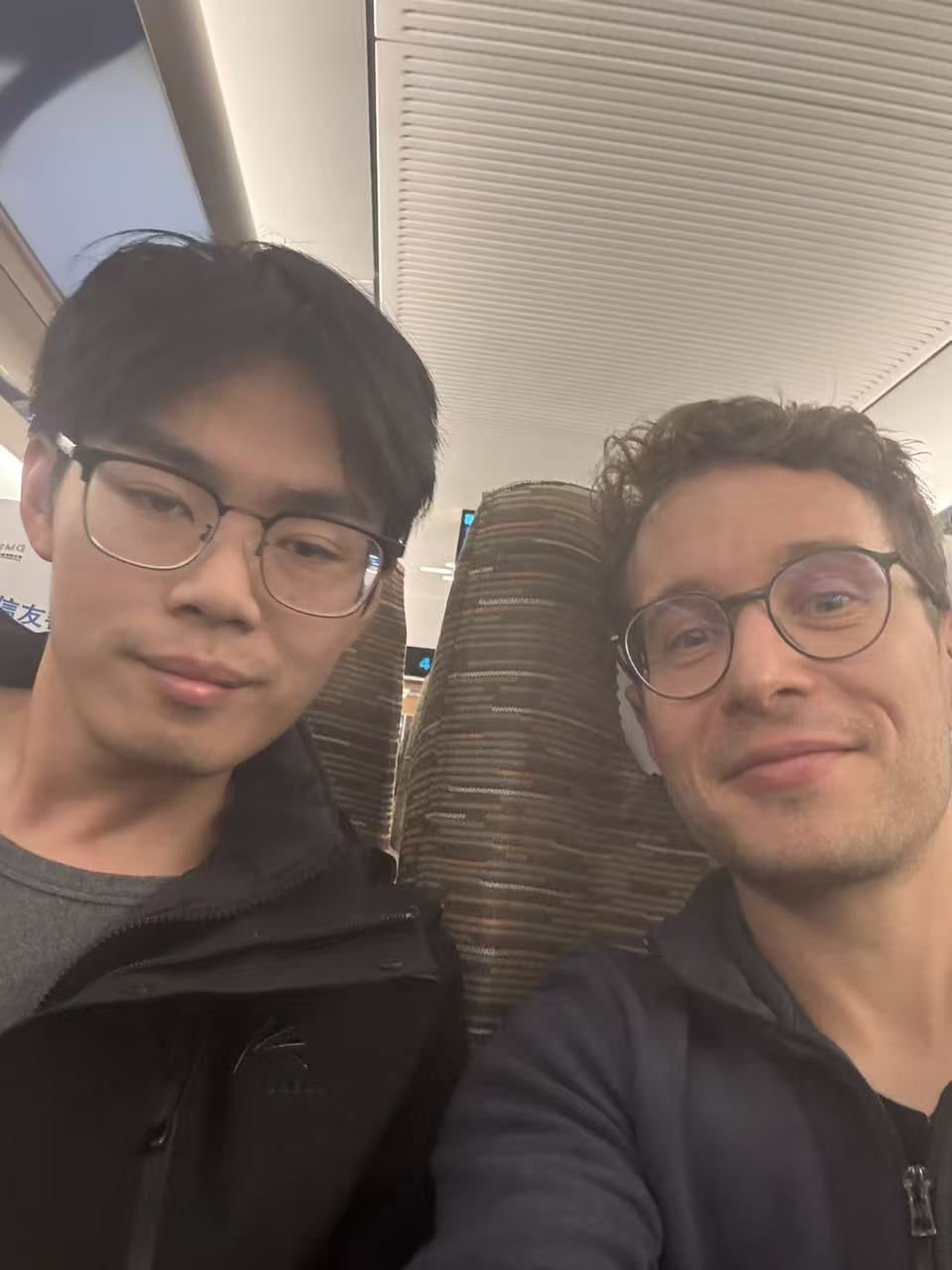
Harvey and me on the train. He said I was the first foreigner he'd ever met. I helped him pick an English name using AI. He picked Harvey.
Harvey is a civil engineering student in his final year. He wants to work on international construction projects — cost consultation, the person who makes sure a project doesn't blow its budget. For that, he needed an English name. Chinese names are often hard for foreigners to remember and pronounce, so most Chinese professionals pick one. His Chinese name is Hao.
I pulled up an AI, fed it his background, and we went through options together on the train. He picked Harvey. It keeps the "Ha-" sound from Hao. It sounds like someone who belongs on an international construction site. Which is exactly where he's headed.
That interaction — a German doctor and a Chinese engineer, sitting next to each other by accident, using AI to bridge the gap between two languages and two careers — is basically everything this site is about.
Who I am
I'm Dominik. Medical doctor from Berlin. I built companies in health and tech, then started working independently — no employees, no office, just a laptop and AI — and moved to China.
Not for a job. Not for a company. I just got tired of reading secondhand takes about the most interesting country on earth and decided to go see for myself.
I expected factories and pollution and the Great Firewall. What I found was bullet trains that make Germany's Deutsche Bahn look like a joke, WeChat payments for everything, and founders who ship products in weeks that would take months in Europe.
Everything I thought I knew about China was five years out of date.
What I stumble into
I work independently — no team, no employees, just AI tools. I build websites, contribute to an academic journal with Johns Hopkins researchers, and organize meetups for health tech and robotics people. All from a laptop.
But what makes this interesting isn't me. It's what happens when you're actually here.
I walk into a makerspace and find people building AI influencers. I visit a dentist who wants to automate orthodontics with computer vision. I tour a government zone where you can enter China without a visa or a passport stamp. I meet a professor who studies ByteDance's internal culture and she wants to study me because I run a company with 20 AI agents.
I help a stranger pick an English name on a train and he tells me I'm the first foreigner he's ever met.
None of this is in the news. None of it fits the narrative. That's why I write it down.
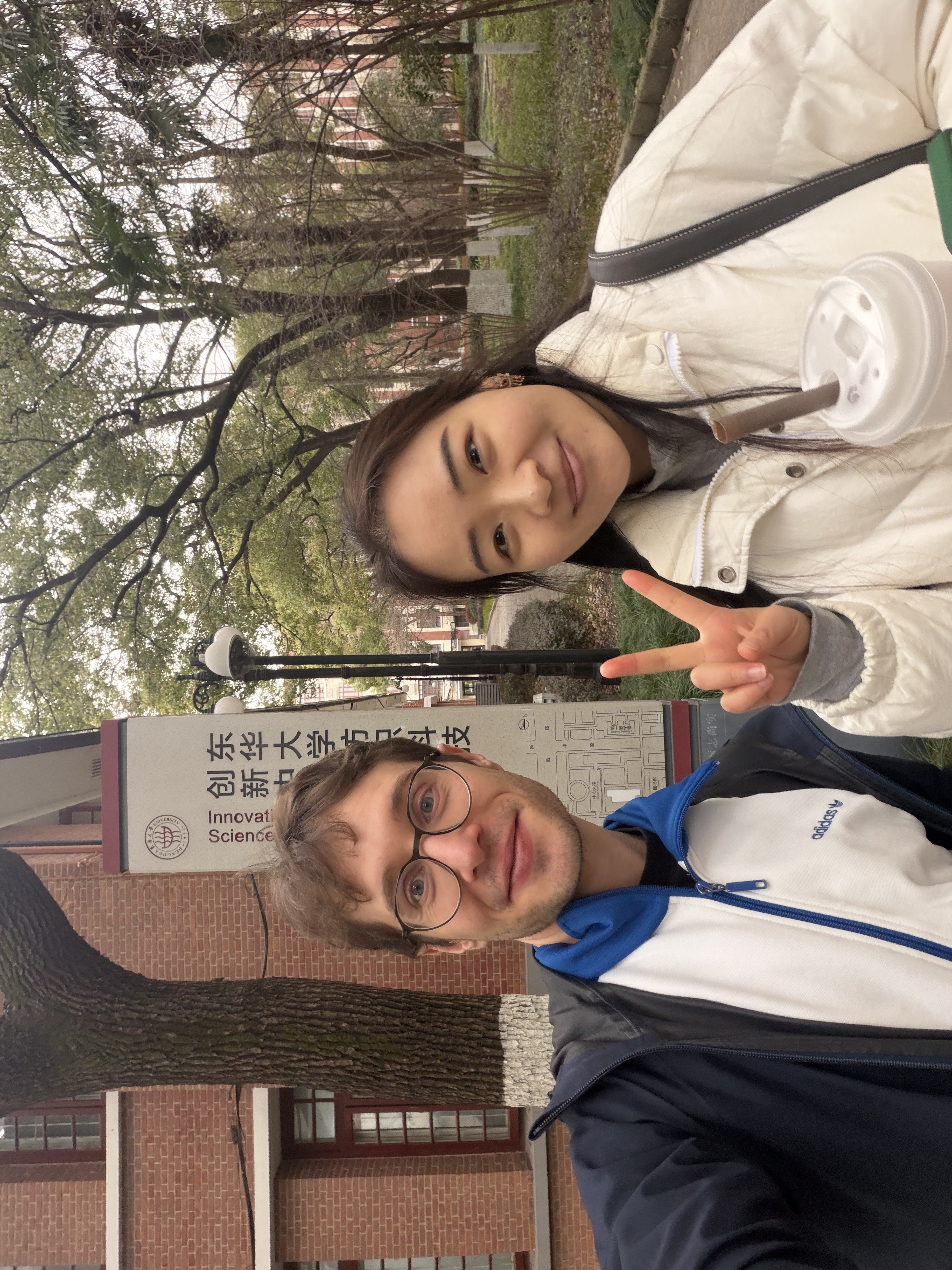
With Prof. Gu Chudan at Donghua University. She studies digital labor on Chinese platforms. She interviewed me about AI. I interviewed her about ByteDance.
What First Foreigner is
First-hand. Not second-hand.
I don't write from a newsroom. I write from factory floors, university offices, hotel lobbies, and high-speed trains. I record conversations with DJI microphones clipped to people's jackets and transcribe them with Chinese AI models running on my MacBook.
The people I talk to are founders, professors, factory managers, government officials, and random strangers who become friends. Some speak English. Some speak only Mandarin. We figure it out — usually with the help of AI.
What this site covers
Tech: What China is actually building — EVs, robots, platforms, AI
Business: How things actually work here — payments, logistics, manufacturing, hiring
Culture: What you get wrong if you've never been — the speed, the scale, the contradictions
Interviews: People on the ground telling their own story — in English and Chinese
Why "First Foreigner"
Because Harvey told me.
He looked at me on that train and said: you're the first foreigner I've ever met. Not the first one this week. The first one ever.
That happens more than you'd think. You walk into spaces where no one looks like you, no one speaks your language, and everything you see challenges what you thought you knew. You're someone's first foreigner. And that gives you a perspective that no amount of desk research can replicate.
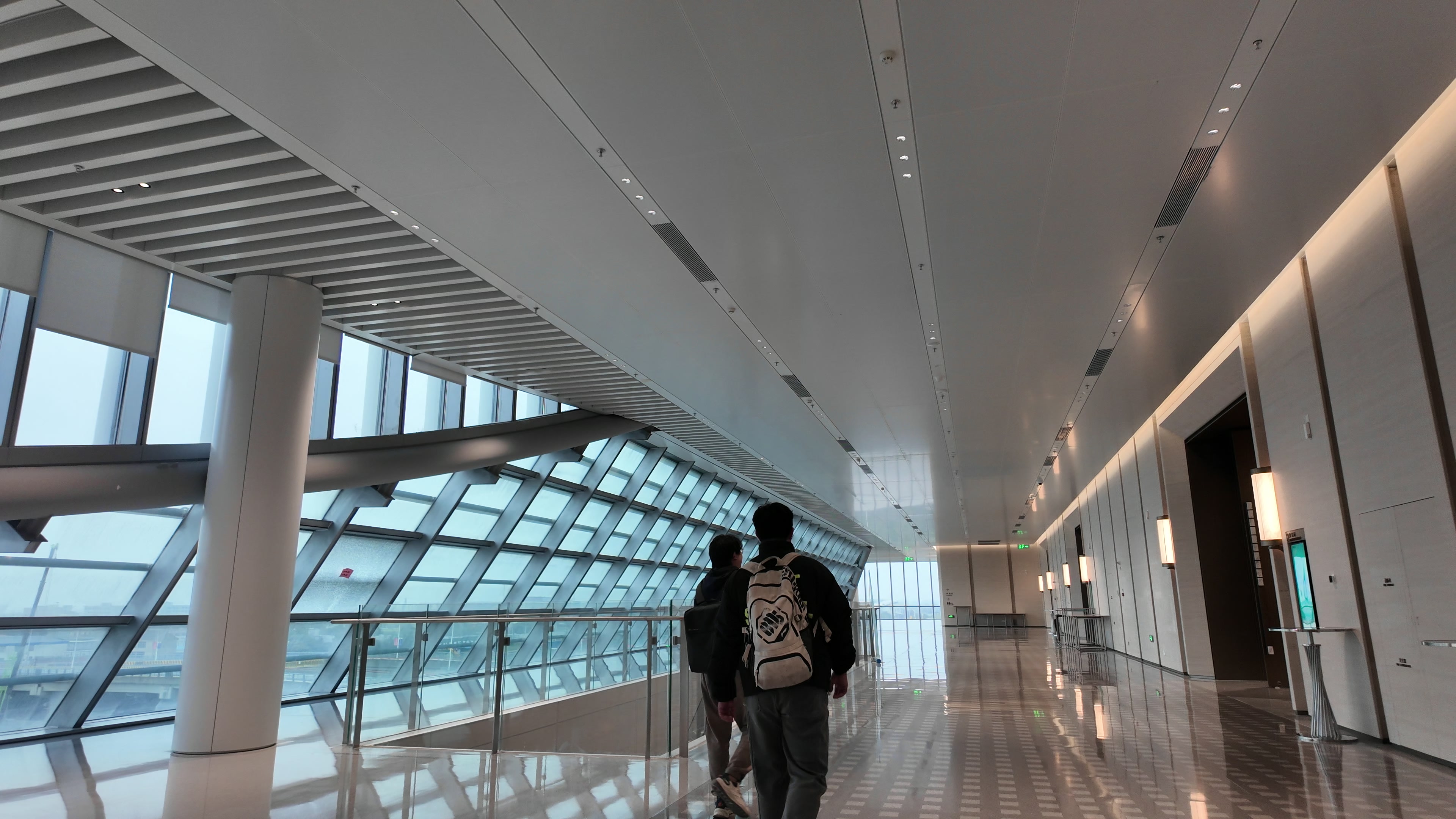
Shanghai Oriental Hub. China's new visa-free zone. You can walk through customs without a visa or a passport stamp.
Come along
I share what I find. No agenda. No paywall. Just what's actually happening.
Read the stories