I Went to BIOCHINA in Suzhou. The Booths Were Not the Story.
A field note from BIOCHINA in Suzhou: smart injection pens, cold-chain demos, Europe conversations, and the harder question of how trust gets built between Chinese suppliers and Western buyers.
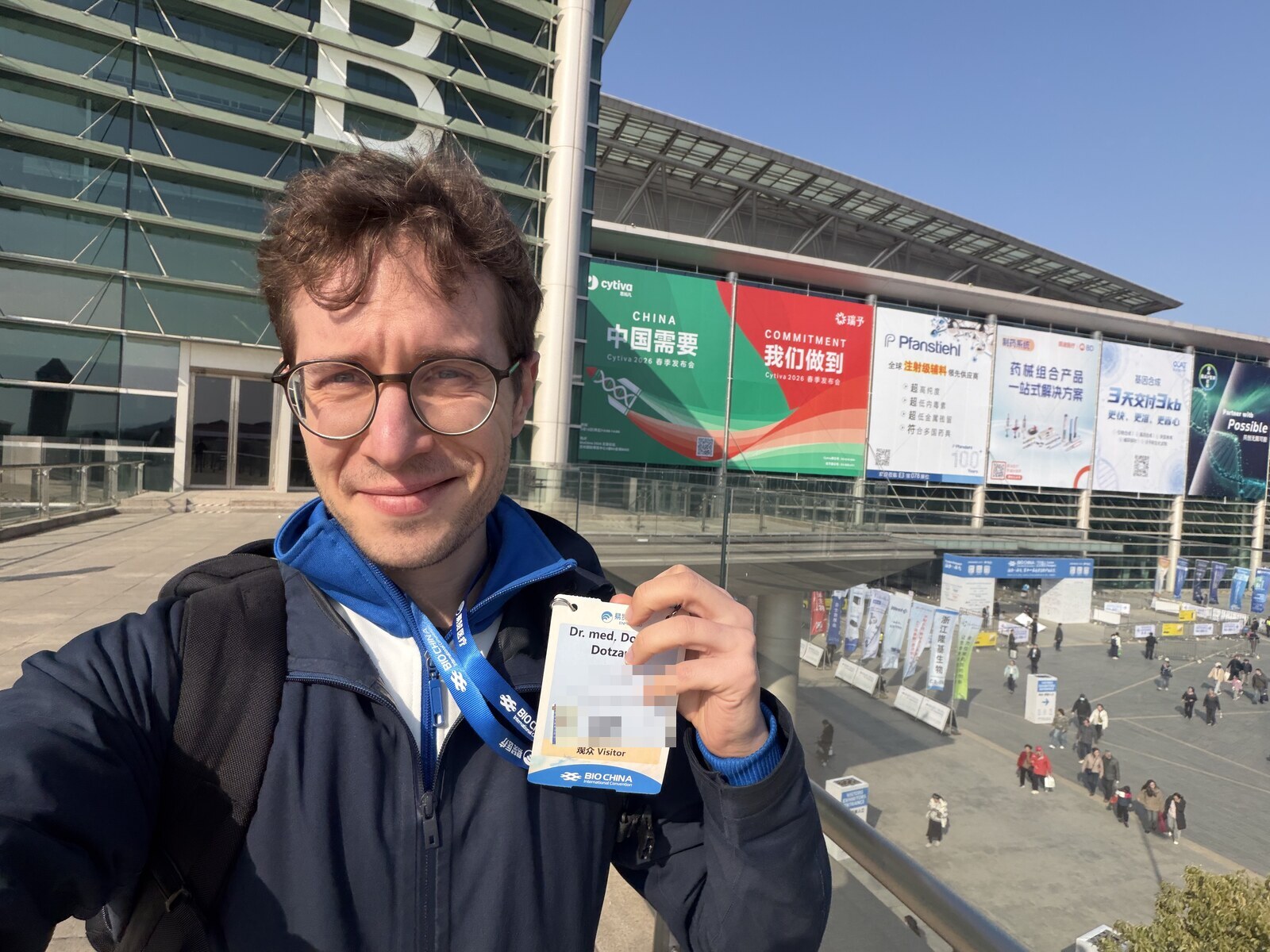
I was standing outside the exhibition hall in Suzhou, holding a coffee in one hand and a BIOCHINA badge in the other, trying to look like I knew where I was going.
I did not.
That is usually the first useful stage of a China event. You arrive with a title, a background, and some reason people let you in. Mine was simple enough: German doctor, health business operator, now trying to understand China from the inside. It sounds coherent when written down. On the ground it mostly means walking into a hall, scanning QR codes, misreading signs, asking naive questions, and slowly figuring out which conversations are real.
BIOCHINA looked, at first, like a normal biotech conference. Booths. Panels. Lanyards. Big screens. Product stands with people who were either extremely prepared or had no idea why a foreigner was suddenly asking about their device in English.
Then the pattern shifted.
The most interesting part was not one booth. It was the shape of the bridge being proposed.
The room behind the room
The visible conference was easy to understand. Chinese suppliers wanted attention. Buyers wanted options. Everyone wanted WeChat. A few people wanted selfies. That part felt familiar after enough events in Asia.
The less visible conference was more interesting.
The questions changed after a few conversations. “What do you sell?” became “Who do you know in Germany?” “Could European companies come here?” “Would German buyers trust this?” “Would a BIOCHINA Europe make sense?” “If we brought Chinese manufacturers, could you bring the right people from the other side?”
That is when I stopped treating the event like a product hunt.
The booths were evidence. The real object was the connection system around them.
In one conversation, the structure was explained bluntly: BIOCHINA can bring speakers, delegations, pharma people, upstream suppliers, downstream suppliers, procurement groups, and local partners into the same orbit. There had already been thinking around places like Australia, South Korea, Japan, India, Russia, Latin America, Singapore, and the US. Europe was harder.
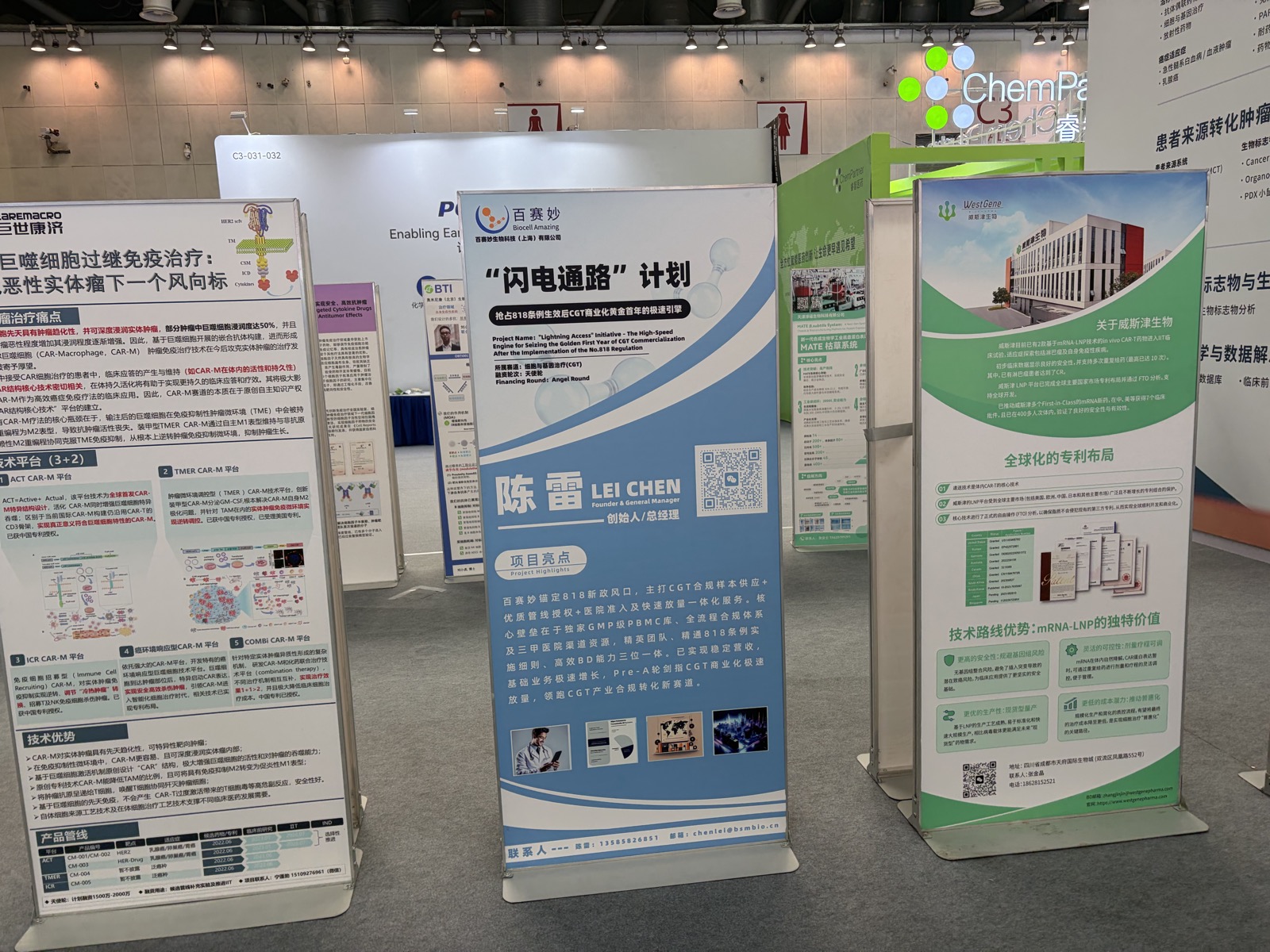
Not because Europe is uninteresting. Because Europe splinters.
Germany is not Europe. France is not Germany. London is not Berlin. A room full of English speakers does not automatically solve local trust. You can put “Europe” on a slide in ten seconds. Building an actual Europe entry point is much more annoying.
That was the question I kept hearing underneath everything else: where does China land in Europe if it wants more than a booth?
Germany kept coming up
Germany came up because the country still carries weight in the exact categories that matter here: pharma, medtech, engineering, regulation, and a reputation for quality that has survived even Germany’s talent for making simple things slow.
For Chinese biotech and medtech suppliers, Germany is attractive because it is hard. If you can make something work there, it gives you credibility elsewhere. For German companies, China is attractive because it is fast, dense, and cheaper in places where Europe has made itself expensive.
That does not mean the match is easy.
Western buyers rarely buy on price alone. They buy trust. They want verification, references, regulatory comfort, quality control, and someone who can explain what happens when the first shipment is not exactly what the PDF promised.
Chinese suppliers often have the other half: speed, capacity, iteration, and a willingness to solve practical problems without turning every step into a philosophical committee.
That gap is where the business sits.
It is also where the awkward part of being a foreigner starts.
People explain things to me differently because I am not from there. Sometimes that helps. Sometimes it creates a weird status effect I do not fully like. I get access because I am German, because I am a doctor, because I can ask basic questions without sounding threatening, and because I can plausibly stand between two systems.
That is useful. It is also something you have to be careful with. The cheap version of this story is “China is fast and Europe is slow.” The truer version is that both sides are difficult in different ways, and the person in the middle has to understand more than translation.
The product demos made it real
On the floor, the abstract bridge turned into objects.
I filmed a smart dosing pen conversation where the seller explained reminders, dose tracking, and preset doses. I asked about costs, manufacturing quantities, and how the thing would compare with simpler injection devices.
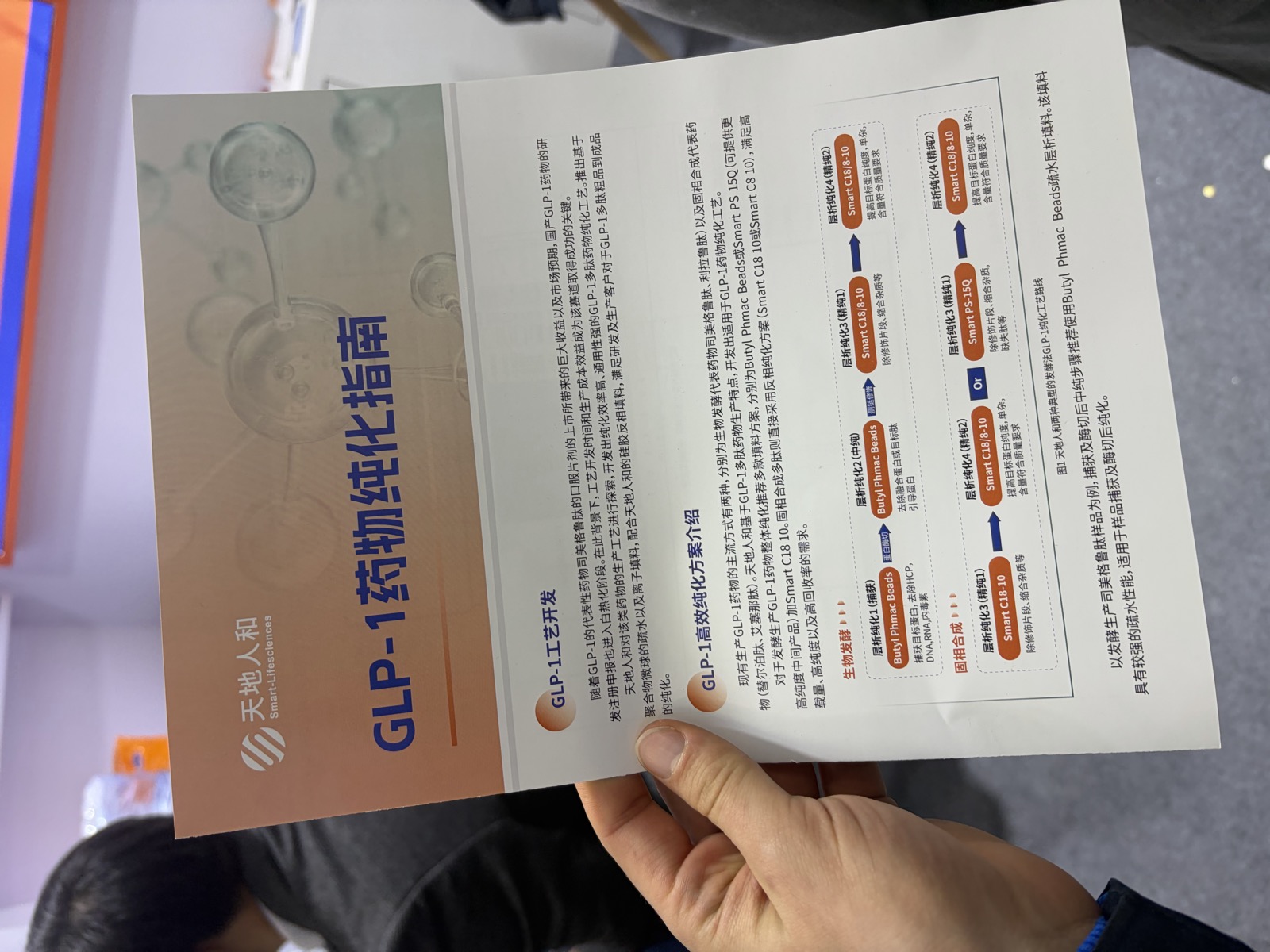
Another stand pulled me into a GLP-1 and semaglutide-related manufacturing conversation. The transcript is messy, because conference-floor audio is always messy, but the theme was clear enough: the obesity-drug supply chain is not an abstract market report here. It shows up as devices, components, services, and people trying to figure out where the next buyer might be.
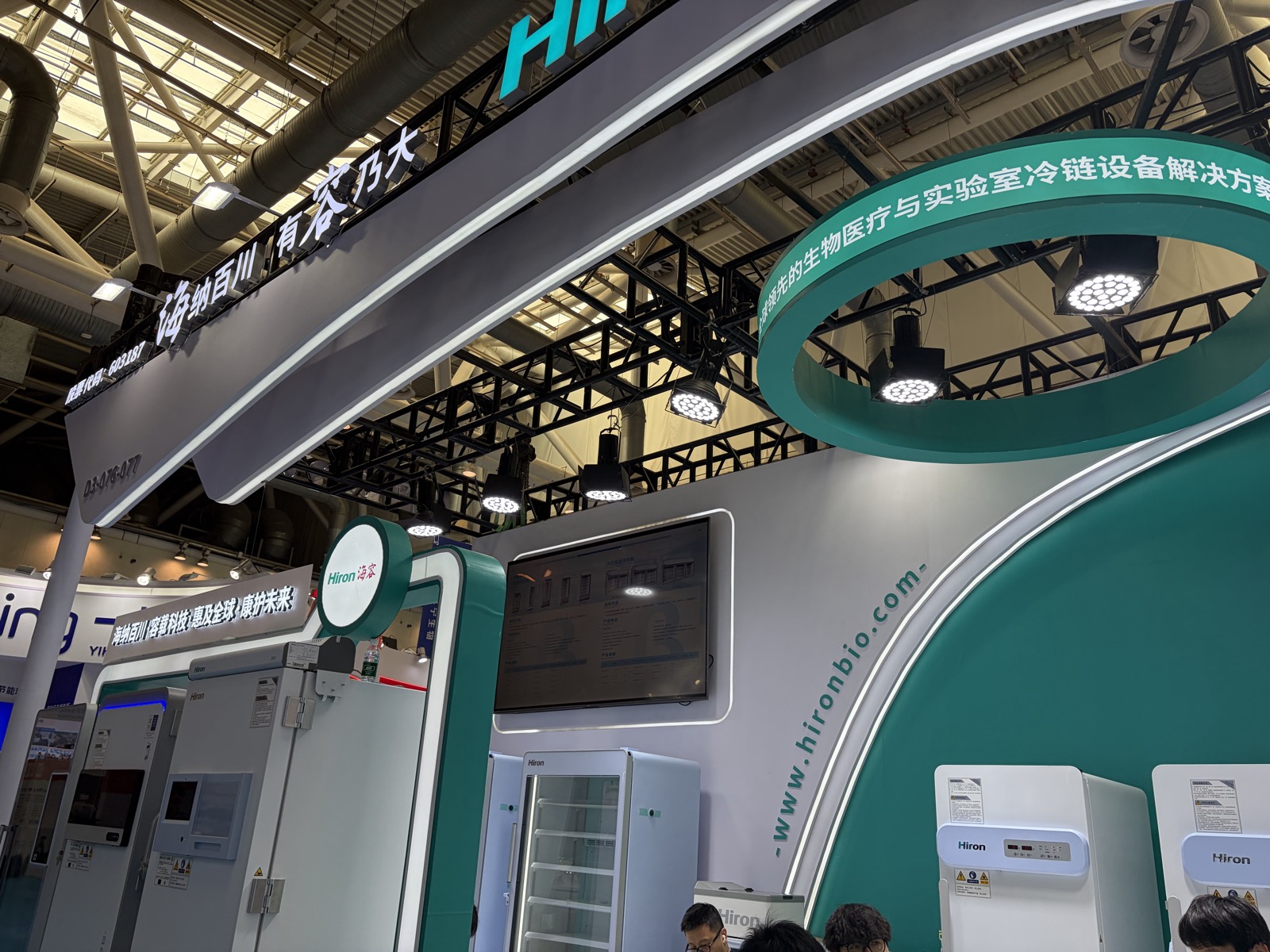
Then came the cold-chain stands.
Small fridges. Battery questions. Portable storage. The kind of product that sounds boring until you remember that medicine does not care about your keynote if it spoils in transit.
There was also a controller that looked like a handheld game device, which is the kind of moment I like at Chinese trade shows: the serious and the slightly absurd sitting next to each other without anyone making a big deal out of it.
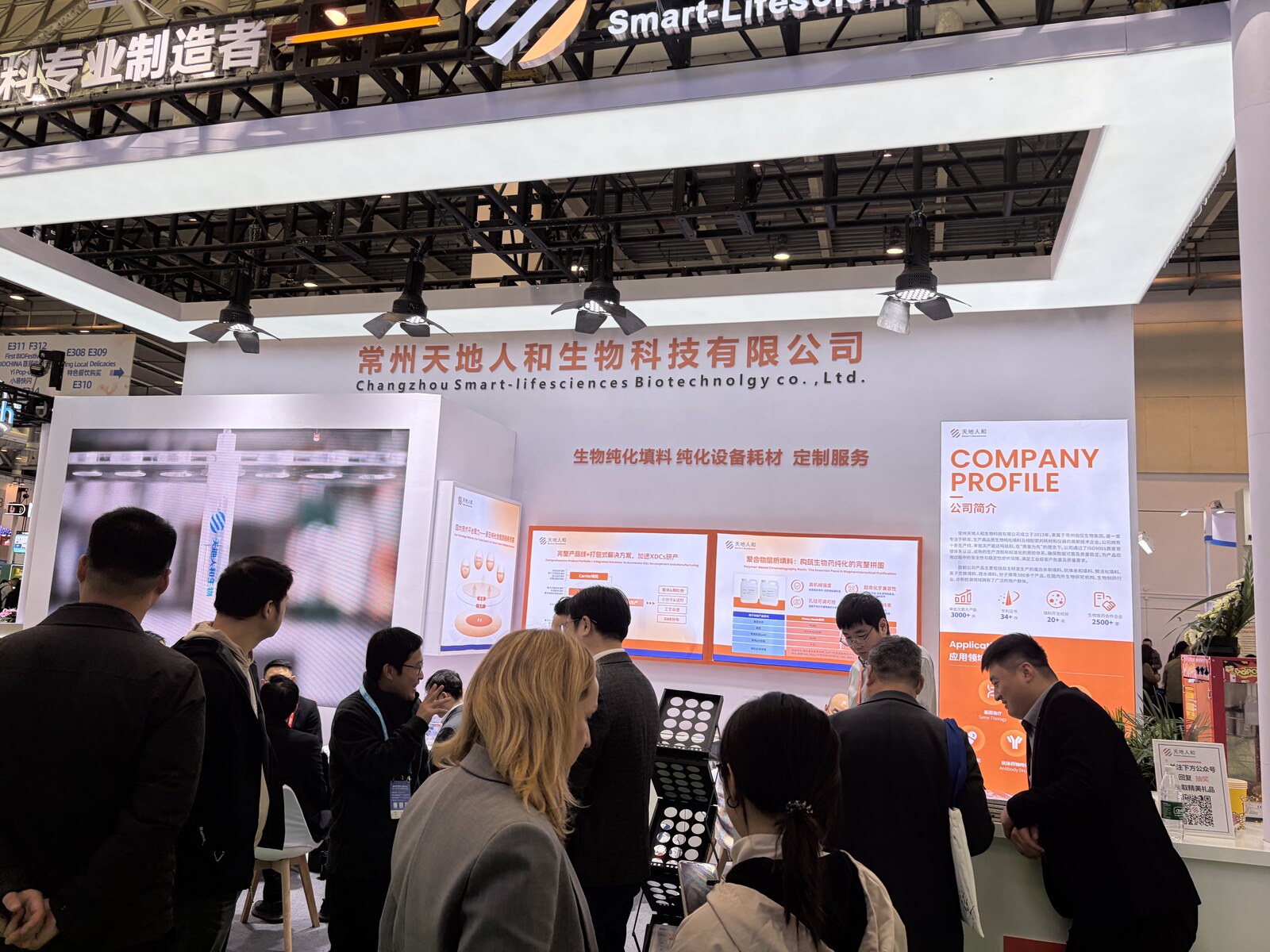
This is why physical events still matter. A PDF can tell you a company has a product. A booth tells you how they explain it, how quickly they answer, whether they understand your question, and whether you would trust them with a second conversation.
The trust problem is not soft
People like to talk about “cross-cultural understanding” as if it is a dinner speech.
At BIOCHINA it looked more practical.
Can a German buyer trust this supplier?
Can a Chinese supplier understand why the German side moves slowly?
Can the German side understand that slow communication can kill a deal before anyone even gets to the technical details?
Can a European event be useful for Chinese companies without becoming another expensive room where people politely exchange business cards and nothing happens?
Those are not soft questions. They decide whether a device, component, service, or licensing opportunity gets anywhere.
The most useful people in this kind of room are not the loudest networkers. They are the translators of risk. Not language translators. Risk translators.
They can tell one side, “This is normal, do not panic.” They can tell the other side, “This will look bad in Germany, fix it before you send it.” They can notice when a product is technically impressive but commercially under-explained. They can also notice when a Western buyer is hiding indecision behind compliance language.
That is the job I kept seeing, even when nobody named it.
Why Suzhou mattered
Suzhou helped the whole thing make sense.
It is polished in a way that makes international business feel less theoretical. Industrial parks. Biomedical clusters. Conference infrastructure. Singapore-China institutional history nearby. Hotels close to the venue. A lakefront skyline that looks like it was designed to reassure visitors that yes, this is serious.
After the conference floor, I walked around Jinji Lake. The Gate to the East was lit up behind me. The city did what good host cities do: it made the argument without saying it out loud.
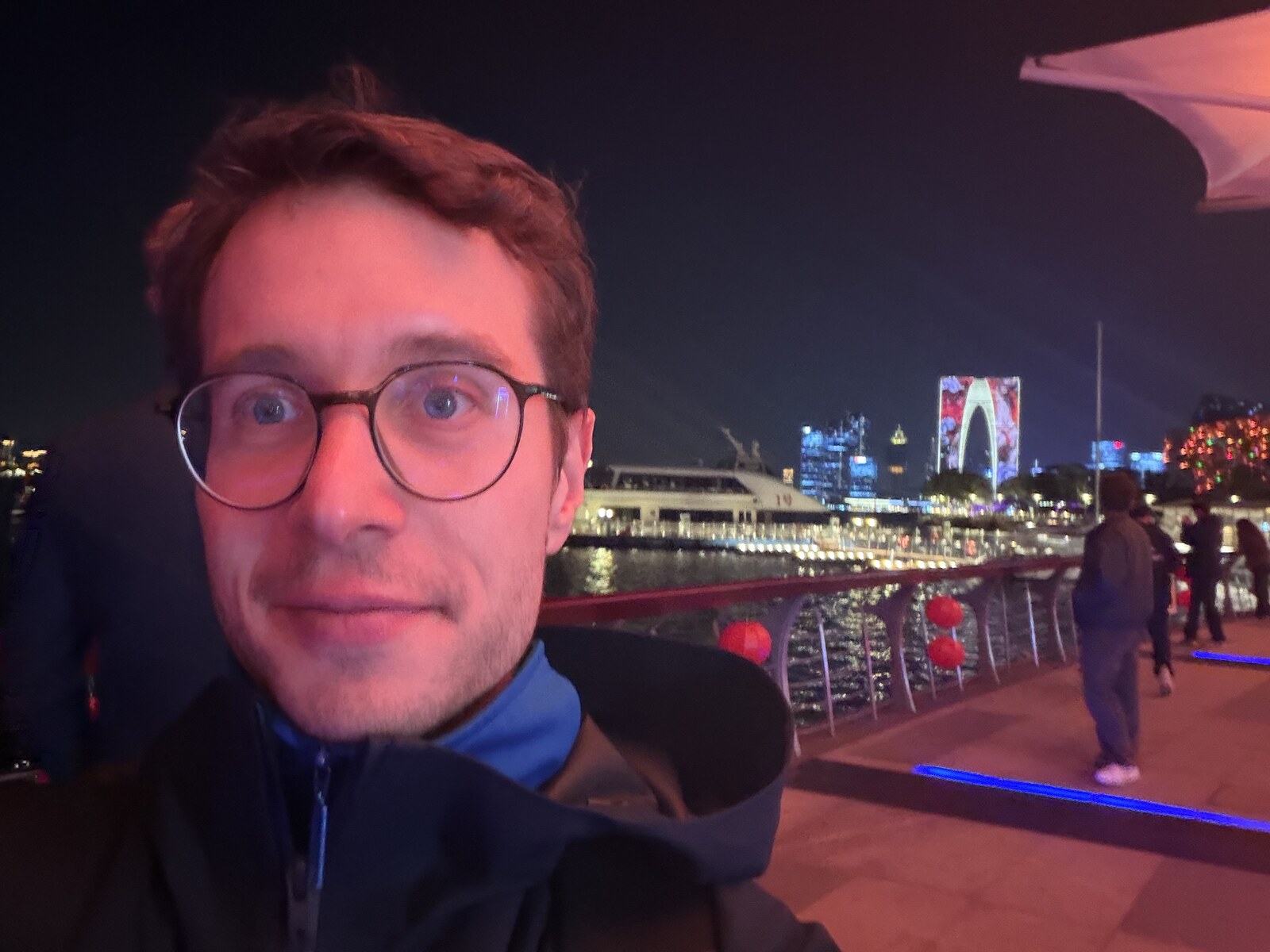
China is still making things. The part I had underestimated is how much effort now goes into building platforms where other people come to make deals around those things.
That is a different story from the one most Europeans still carry around.
The old version is simple: China manufactures, the West brands, regulates, and sells.
The newer version is less comfortable: China manufactures, iterates, hosts, finances, licenses, and increasingly tries to organize the room.
BIOCHINA felt like one version of that room.
What I left with
I did not leave BIOCHINA with one clean scoop.
I left with a map.
There are Chinese suppliers who need Western trust. There are Western companies that need Chinese speed and cost structure. There are event organizers trying to figure out whether Germany, Berlin, London, or some broader European format could work. There are medtech and pharma products that look simple until you ask about regulation, quality, after-sales support, and who takes responsibility when something breaks.
And there are foreigners like me walking around with badges, trying to understand whether we are useful, naive, early, or all three.
That is why the line stayed with me:
The most interesting part was not one booth. It was the shape of the bridge being proposed.
The bridge is not finished. It may not even be designed correctly yet.
But in Suzhou, for a few hours, I could see the outline.
Want more stories like this?
First-hand insights from China. No spam, no fluff.