This Is Perfect, Oh My God — Meeting a Digital Labor Researcher in China's Visa-Free Zone
A chance encounter with Professor Gu Chudan at Donghua University turns into a deep dive on China's gig economy, platform workers, and why Western researchers can't get this data.
I was touring Shanghai’s new visa-free zone when a Chinese professor overheard me say “one-person company.” Four days later, she interviewed me for two hours. Then I interviewed her. What she told me about who really does the work on China’s internet changed how I think about platforms.

Inside the Shanghai Oriental Hub Special Economic Zone.
The Zone
I’m walking through an enormous glass corridor that looks like an airport terminal from 2040. Except it’s not an airport. It’s the Shanghai Oriental Hub — China’s first “inside the border, outside customs” zone. You can enter without a visa. No stamp in your passport. Up to 30 days.
I’m here because of Songping Que, who’s organizing the OPC Summit in this zone. He’s showing a small group of us around: empty exhibition halls the size of aircraft hangars. Conference rooms with floor-to-ceiling ink paintings. A customs checkpoint that scans your face and waves you through.


Left: Exhibition halls still under construction. Right: Already curating art.
The zone is so new that half the spaces are still raw concrete. Workers are installing lights. There’s a duty-free shop with exactly three customers. But the conference rooms are already immaculate — marble floors, calligraphy on the walls, 200-person capacity.
China builds the infrastructure first. Then waits for the world to show up. … Between the checkpoint and the conference room, I end up talking to a woman in a fur-lined coat. She asks what I do.
I give my usual answer. Doctor. Moved to China. Run a one-person company. Use AI for most of the work.
She stops walking.
This is perfect, oh my god. Can I interview you? I study digital labor — one-person companies are my newest research focus. Can we record video? How does tomorrow work?
— Prof. Gu Chudan, upon hearing the phrase “one-person company”
Her name is Gu Chudan. She’s a professor at Donghua University. She’s spent years studying who actually does the work on China’s internet — from fan armies to content creators to ByteDance engineers. And her latest obsession is people like me: solo entrepreneurs using AI to do what used to require a team.
We agreed to meet at her university a few days later. She would interview me. I would interview her. Neither of us quite knew what we’d find. …
The Interview (That Almost Didn’t Work)
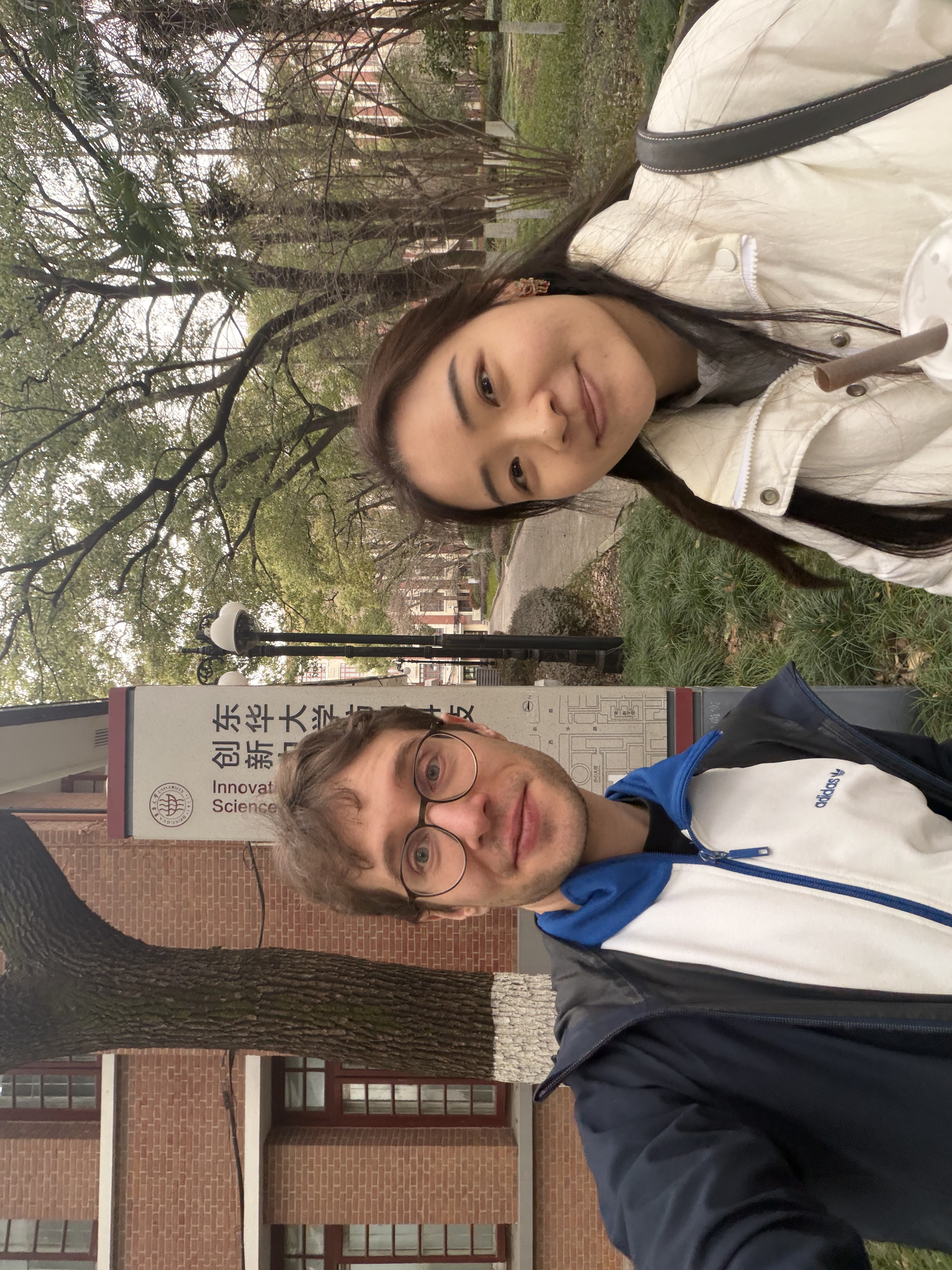
Donghua University, Innovation Center for Textile Science and Technology.
Problem: she speaks almost no English. I speak almost no Chinese.
For the first ten minutes, we fumbled. She tried Tencent Meeting’s live translation. I tried speaking slowly. She pulled up WeChat translate. Nothing worked well.
Then she switched to full Mandarin and just started talking. Fast. For two hours.
I understood maybe 5% in real time. But I had two DJI microphones clipped to our jackets recording everything. And I had AI that could transcribe Mandarin later.
The irony wasn’t lost on either of us: a researcher studying digital labor being recorded by AI tools, interviewed by an entrepreneur whose entire company runs on AI, with translation handled by yet another AI. We were her research subject and her research method at the same time.
Who Actually Does the Work
Prof. Gu doesn’t think about platforms the way most people do. She doesn’t care about MAUs or revenue or market cap. She asks one question: who is working?
Her answer: almost everyone. And she breaks it into three layers.
Front stage: You. The user. Every scroll, like, comment, and share is labor. You’re producing data, training algorithms, and generating engagement — for free. Fan communities take this further: organized groups across multiple platforms, running coordinated campaigns for their idols. Structured like companies. Unpaid like volunteers.
Middle stage: Content creators. Prof. Gu calls them 数字灵工 — “digital creative labor.” They’re the content factory. They create, optimize, A/B test thumbnails, study algorithms, post at optimal times. They get paid, but barely. And their income depends entirely on their relationship with the algorithm.
Back stage: The engineers and managers inside ByteDance, Alibaba, Tencent. The people who build and maintain the machine. Prof. Gu embedded herself inside these companies. She did the 996 schedule with them. She read every internal WeChat post.
Three layers. One platform. And the people on each layer barely know the others exist. …
What Each Algorithm Feels Like
Here’s where it gets interesting. Prof. Gu didn’t just study algorithms technically. She asked creators how each one feels.
Douyin (抖音) — the treadmill. China’s TikTok (same parent company, different app). 750M+ daily users. Short video platform that dominates mobile screen time. Designed to keep you running. Creators feel addicted and trapped. The algorithm decides what you see based on your past. You can’t escape your own data shadow.
Xiaohongshu (小红书 “RED”) — the meritocracy. Part Instagram, part Pinterest, part product review site. 300M+ monthly users, mostly young women. Where China discovers brands and lifestyle trends. New creators get real chances. Feels fair, efficient. But demands constant identity management — you have to become a brand, not a person.
Bilibili (B站) — the niche trap. China’s YouTube meets Reddit. Long-form video, anime, gaming, education. Known for its scrolling comment overlay (弹幕). Fiercely loyal Gen Z user base. Diverse content, but creators worry about getting boxed in. The algorithm reinforces what you already like. Hard to break out.
Weibo (微博) — the invisible hand. China’s Twitter/X. The public square for breaking news, celebrity drama, and political discourse. 580M+ monthly users. Creators say they can barely feel the algorithm. Complex but gentle. Great for fan communities. The platform stays out of the way — mostly.
This matters if you build or sell in China. Douyin isn’t just “Chinese TikTok.” It feels different to the people who make it work. The creators, the marketers, the brands — they develop completely different strategies for each platform, not because the APIs are different, but because the subjective experience of being inside each algorithm is different.
ByteDance’s Secret: Making Uncertainty Feel Normal
Prof. Gu read every internal-facing article ByteDance published on WeChat. Every speech by management. Every cultural document she could access.
Her finding: ByteDance doesn’t just tolerate uncertainty. It manufactures it.
The company’s internal messaging repeats the same themes: embrace uncertainty. Don’t fear instability. Treat chaos as opportunity. Zhang Yiming gave public talks about it. Internal stories celebrate it. The culture doesn’t say “work hard” — it says “the ground beneath you is always moving, and that’s fine.”
The result? Employees don’t need managers breathing down their necks. They’ve internalized the pressure. They drive themselves because they genuinely believe that speed and constant adaptation are the only rational responses to a world that won’t hold still.
That’s why ByteDance ships so fast. Not because of 996. Because of a culture that makes uncertainty feel like oxygen. …
200 Million People the West Doesn’t See
I asked Prof. Gu what Western coverage gets wrong about China’s gig economy. She didn’t hesitate.
“There are 200 million flexible workers in China. Delivery drivers, ride-hailing drivers, livestreamers. And yes — every society has this stratification. You have it in Europe. You have it in America.”
She paused.
“But I think what we do better is that we actually pay attention. We’ve built service stations for these workers. We’re creating policy responses. Western media likes to frame it as exploitation — and some of it is — but the assumption that China ignores these people is just wrong.”
I’m not sure I fully agree. But I also can’t argue with someone who spent years inside these systems, doing the fieldwork, reading the internal documents, talking to the workers. She’s earned the right to push back.
Why She Wanted to Study Me
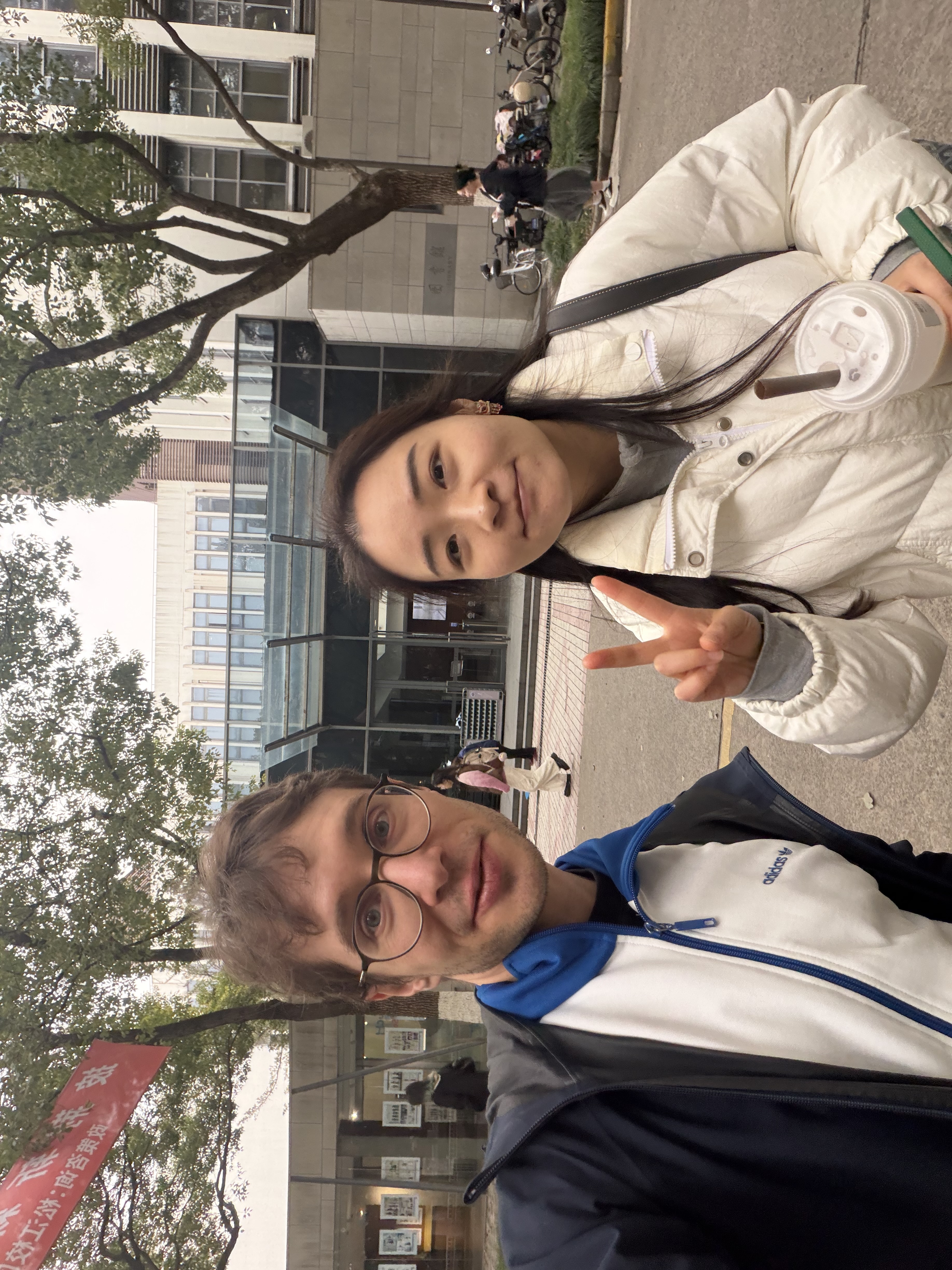
After the interview. She asked me about my 20 AI agents. I asked about ByteDance. We both left with more questions.
In the second half of our meeting, she turned the microphone around. She wanted to interview me.
Her new research focus: one-person companies powered by AI. She sees them as the frontier of digital labor — where the line between worker, entrepreneur, tool, and platform disappears entirely.
She asked me everything. How many projects do you run simultaneously? How do you manage 20 AI agents? Do you consider yourself an entrepreneur? What about when the AI makes mistakes — who’s responsible?
She was fascinated that I came to China through the Dynamite Circle — an online community for location-independent entrepreneurs — and that I was now sitting in her office in Shanghai, running a company from a laptop, building websites for Chinese businesses, publishing a journal with Johns Hopkins researchers, and organizing health tech meetups. All as one person.
For her, I wasn’t just an interview subject. I was a walking case study of what happens when digital labor evolves past the platform entirely. When the platform is you.
That conversation — her questions, my fumbling answers, what it revealed about the future of work — is Part Two.
How this happened
I came to China through the Dynamite Circle, an online community for location-independent entrepreneurs. I was touring the Shanghai Oriental Hub SEZ — China’s new visa-free special economic zone — with Songping Que, who is organizing the OPC Summit there.
Prof. Gu Chudan was part of the same group. We met between a customs checkpoint and a conference room. A few days later, we sat down for a formal interview at Donghua University, conducted in Mandarin and English with real-time translation via Tencent Meeting and two DJI lavalier microphones.
The audio was transcribed using SenseVoice (Alibaba’s multilingual ASR model) running locally on a MacBook. Because of course it was.
Want more stories like this?
First-hand insights from China. No spam, no fluff.