Where to Stay for muShanghai 2026: The Complete Hotel Guide
Six hotel options near the muShanghai campus in Minhang — from the Steigenberger 4-star to affordable Chinese business chains under 400 RMB/night. All walkable to the venue.
Where to stay for muShanghai 2026: a hotel guide that actually works
People ask me almost every day where to book a room for muShanghai. It’s a fair question. Shanghai is enormous — bigger than most people realize before they land — and the muShanghai campus is not in the part of Shanghai you’ve seen on Instagram. It’s in Minhang, out near the Hongqiao transport hub and NECC. If you book a cute boutique in Xintiandi or a hostel in the Former French Concession, you’ll spend two hours a day on the metro and miss every spontaneous coffee, dinner, and side-hallway conversation that actually makes the program worth $149.
The good news: there are six solid hotels all within walking distance of the campus, ranging from a 4-star European brand to budget Chinese chains under 400 RMB/night. This article walks through what they are, what they cost, and how to choose between them.
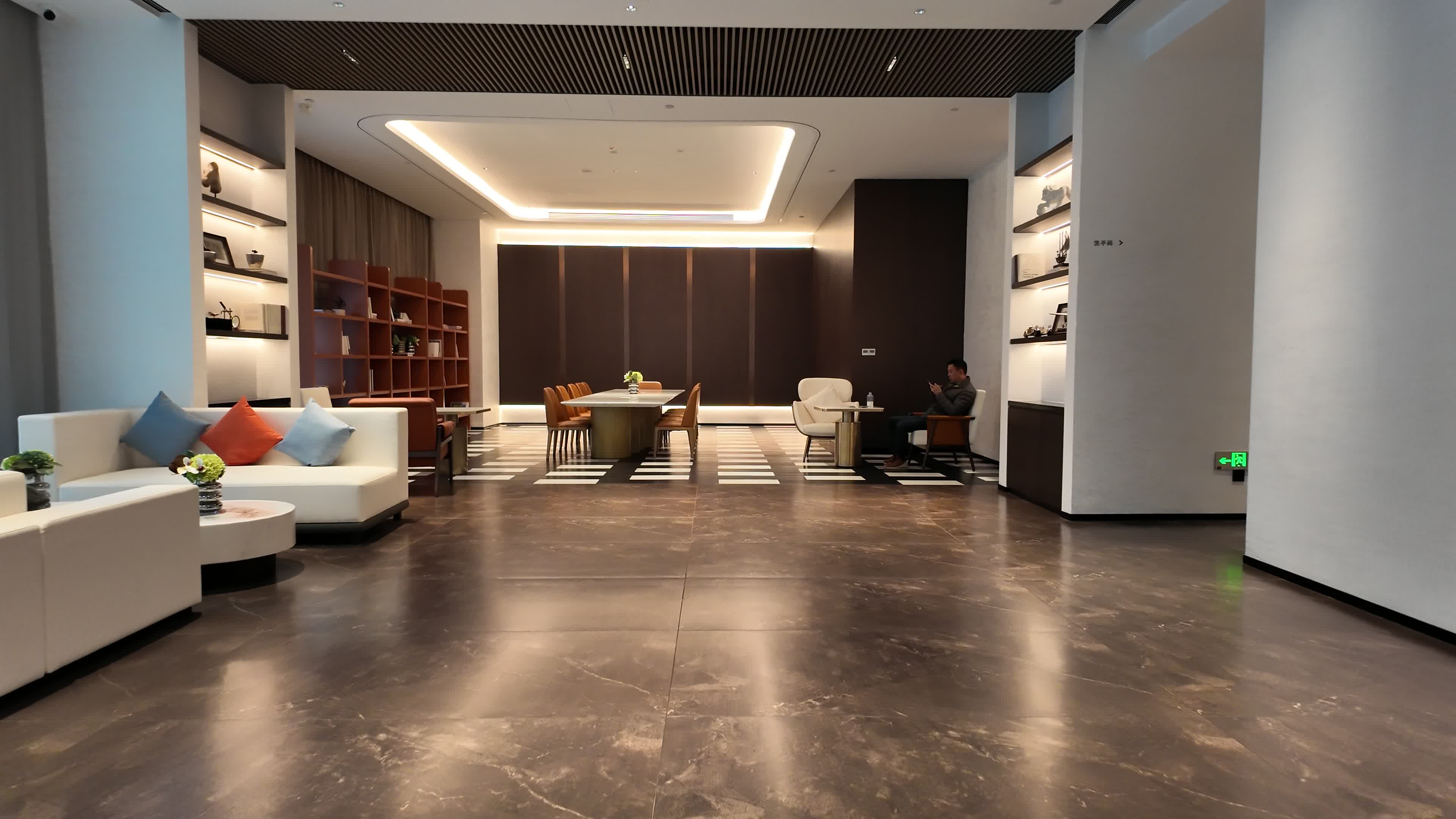
Why Minhang? (Or: why your hotel needs to be near Hongqiao)
Minhang is Shanghai’s western tech-and-trade district. It’s anchored by two things foreigners might not know but should: Hongqiao Hub is one of China’s most ambitious integrated transport megastations — domestic airport (SHA), Asia’s largest high-speed rail station, three metro lines (2, 10, 17), intercity buses — all connected under one roof. Just next door in Qingpu District sits NECC (the National Exhibition and Convention Center, the four-leaf-clover building you can see from space), which hosts the China International Import Expo and dozens of other industry events that pull in global executives.
Around these anchors a real “international business” corridor has grown — the Hongqiao CBD with its tower cluster (Alibaba has a Hongqiao office here, along with dozens of MNCs and domestic firms), tech parks, restaurant streets, and a hotel cluster ranging from 4-star European brands down to clean Chinese chains under 400 RMB. NIO’s registered HQ is also in Minhang, just east of the Hongqiao zone.
The muShanghai campus sits inside this cluster on purpose. The infrastructure is here, the airport is ten minutes away, the rail-station-to-rest-of-China is ten minutes the other way, and the rents for a 28-day pop-up venue are a fraction of what they’d be in Jing’an or Xintiandi. From any of these six hotels you’re 5–15 minutes to the venue on foot, or roughly 3 RMB in a DiDi.
The six recommended hotels at a glance
Steigenberger Shanghai Hongqiao
4-star EuropeanPolished, business-class. For investors, corporate visitors, anyone billing it.
Jianguo Hidden Hotel
Boutique designPhotogenic, quieter, design-led. For creatives, photographers, longer stays.
Manxin Hotel Hongqiao
Upper-mid · H WorldReliable, modern, full-service. Solo founders who want comfort without the 4-star price.
Crystal Orange Hotel Hongqiao
Modern chain · H WorldClean lines, young-professional vibe. Builders who care about wifi and a desk, not lobbies.
Echarm Hotel Hongqiao
Mid-range · Jin JiangSolid value, no-frills. Best price/quality ratio for a 28-day stay.
JI Hotel Hongqiao
Entry-tier · H WorldCompact, clean, capsule-feel. Backpackers and students stretching the budget.
A few notes for context. At today’s rates $1 is roughly 6.8 RMB, so a 400 RMB room is about $59. H World (formerly Huazhu) is China’s largest hotel group — Manxin, Crystal Orange, and JI Hotel are all H World sub-brands at different price points, run with the same operational discipline. Echarm belongs to the Jin Jiang group, China’s other major domestic hotel operator, with similar standards. Steigenberger is part of the German Deutsche Hospitality — acquired by H World in 2020 and rebranded as H World International in 2024. What this means in practice: the standards across the cluster are unusually consistent. You’re not gambling between a great hotel and a dive — you’re choosing how much polish you’re paying for.
A bit more on each
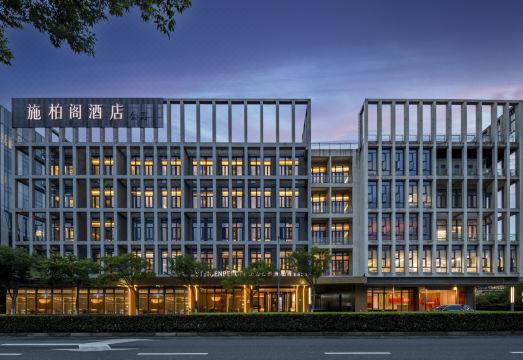
Steigenberger Shanghai Hongqiao (Shenhong Road, Minhang) is the corporate flagship of the cluster. Big lobby, real concierge, full breakfast buffet, English-fluent front desk. If you’re flying in for a week of investor meetings or you want a guaranteed-frictionless stay, this is the choice.
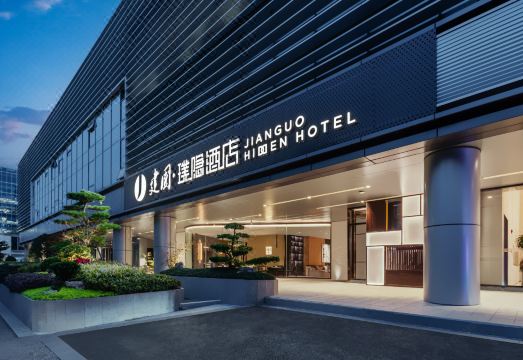
Jianguo Hidden Hotel (Hongqiao CBD) is a boutique with a design sensibility — stone, wood, soft lighting, the kind of place that photographs well. Slower pace than the chains. Great for longer stays where you want the room itself to feel like a retreat.
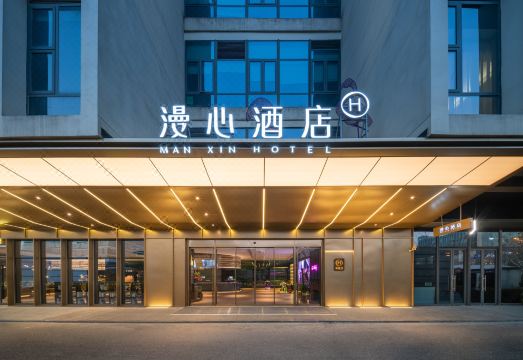
Manxin Hotel Hongqiao (Huaihong Road, Minhang) is H World’s upper-mid tier — think a polished business hotel without the 4-star markup. Solid choice for solo founders.
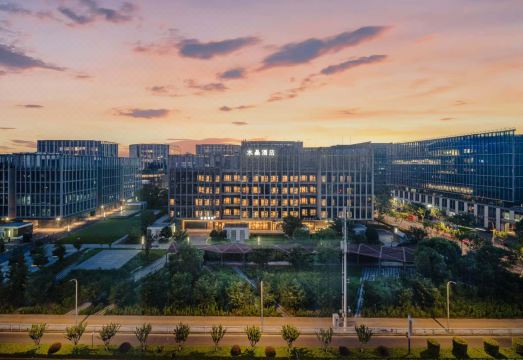
Crystal Orange Hotel Hongqiao (Minhang, near Hongqiao Hub) leans modern and minimalist. Strong wifi, decent desks. Popular with younger Chinese business travelers, which means you’ll likely be the only foreigner at breakfast — a feature, not a bug.
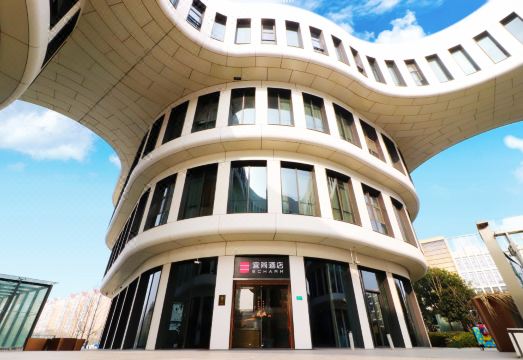
Echarm Hotel Hongqiao (Xinghong Road, Minhang) looks like the best value/quality ratio in the cluster based on reviews and pricing. Rooms are small but well-designed, and you’ll save around 12,000 RMB over 28 days versus Steigenberger.
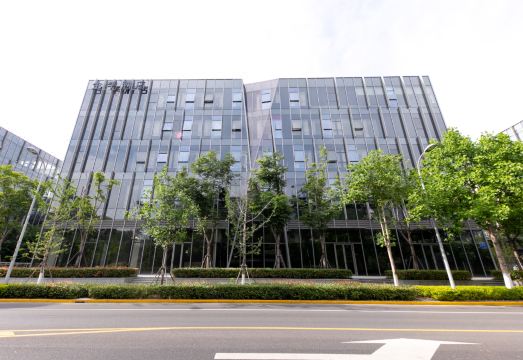
JI Hotel Hongqiao (Minhang) is the budget pick. Compact rooms, capsule-ish vibe, but spotless and totally functional. If you’re a student or you’d rather spend the saved money on a side trip to Shenzhen, this is the right call.
All six hotels are confirmed to accept foreign passports — search them on Trip.com or Booking.com by name for the best rates. Mention muShanghai at check-in and the front desk will know what you’re there for.
How to book
The simplest approach: search the hotel name on Trip.com (best China hotel inventory and prices, English interface) or Booking.com. Both filter for foreigner-friendly properties automatically. You can also book directly through the hotel’s own website or the H World app for Manxin, Crystal Orange, JI, and Steigenberger.
For group bookings (3+ rooms or a team staying together), reach out to the muShanghai organizers — they can coordinate with the hotel directly and sometimes get group rates.
What’s the commute actually like?
From all six hotels you’re 5–15 minutes to the muShanghai campus on foot, or a 3–8 RMB DiDi (Chinese Uber) if it’s raining or you’re carrying gear. The Steigenberger and JI Hotel are the closest two; Hidden Hotel and Manxin are the furthest, but still under 15 minutes walking.
For comparison: if you stay in central Shanghai — Jing’an, Xintiandi, the French Concession, the Bund — you’re looking at 40–60 minutes door-to-door each way on Metro Line 2, plus walking at both ends. That’s 1.5–2 hours of your day evaporated, every day, for 28 days.
Alternative options worth knowing about
- Serviced apartments / Airbnb (long stays). If you’re staying the full 28 days and want a kitchen, look at serviced apartments around Hongqiao. A decent 1-bedroom typically runs 6,000–10,000 RMB for the month. Trip.com, Tujia, and Wellcee have the best inventory; Wellcee is more expat-friendly. The catch: long-stay apartments don’t always handle the foreigner registration that hotels handle automatically (see below).
- Staying central for the Shanghai experience. Some attendees deliberately base themselves in Jing’an or near the Bund because they want to actually experience Shanghai outside of work hours. Reasonable choice — just budget the commute and accept you’ll miss most of the spontaneous evening side-events.
- Hostels and dorm rooms. They exist near Hongqiao, but I wouldn’t recommend them for a builder program. You need quiet sleep and a desk; hostels deliver neither reliably.
What to actually look out for when booking a Chinese hotel
A handful of things that trip up foreigners booking in China for the first time:
Foreigner-friendly status. Historically not every Chinese hotel could accept a foreign passport — only properties with the “foreign-related qualification” certification could host foreigners. A central government directive in 2024 officially removed this restriction, but enforcement is still uneven at smaller budget and independent properties, which sometimes still turn foreigners away citing “system issues” at the front desk. Trip.com and Booking.com filter for this automatically; the six hotels above are all confirmed to accept foreign passports.
Passport registration. Every foreigner staying in China is legally required to register their address with the local police within 24 hours of arrival. Hotels do this for you automatically at check-in — that’s part of what you’re paying for. If you stay in an unregistered apartment, you have to walk into the local police station yourself to register. Hotels are simpler.
What’s included. Wifi is universal and fast in Chinese hotels — this isn’t 2014, you don’t need to ask. Breakfast is usually included at Steigenberger and Hidden, often optional and 50–80 RMB extra at the chains. The muShanghai campus has its own unrestricted internet, so for work you’re covered there; you only need hotel wifi for personal use in your room.
Booking platforms. Trip.com and its Chinese sister brand Ctrip — both owned by Trip.com Group — together dominate the China market: best inventory, best prices, English interface on Trip.com. Booking.com works but sometimes shows higher rates because of how it handles Chinese inventory. Agoda is solid for Asia.
Deposits. Chinese hotels typically hold 500–1,000 RMB on a credit card or in cash as an incidentals deposit at check-in. It’s released at checkout if you didn’t break anything. International credit cards work fine at Steigenberger and Hidden; the cheaper chains are sometimes friendlier to Alipay or WeChat Pay than to a foreign Visa.
For everything else China-arrival-related — eSIMs, Alipay setup, the visa flow — start with the muShanghai visa checker and the deeper China visa guide.
FAQ
Can I book for less than the full 28 days? Yes. All six hotels accept short stays — anything from one night up.
Do I need to speak Chinese to check in? No. Front desk staff at all six hotels speak basic English (much better at Steigenberger and Hidden, functional at the chains). For anything complex, WeChat Translate or Google Translate’s camera mode handle it. Bring your passport — that’s the part they actually care about.
Will WeChat Pay and Alipay work at these hotels? All six accept both. Steigenberger and Hidden also accept international credit cards without friction. The Chinese chains technically accept international cards but it’s smoother to pay the room balance in Alipay if you’ve already set it up.
What if something goes wrong with my booking? For anything muShanghai-related (visa, venue access, day-to-day program), the organizers run a Telegram community where someone will answer quickly.
Book your room
If you’ve already decided to come to muShanghai, don’t overthink the hotel. Pick the price tier you want from the table above and search the name on Trip.com. Need to figure out the visa first? Use the visa checker. Want to see what the campus actually looks like? The venue guide has the floorplan.
See you in Minhang.
Want more stories like this?
First-hand insights from China. No spam, no fluff.